
Primelectric Studies South Korea’s Power Distribution Model To Enhance Local Utility Services

Primelectric Holdings, Inc. has taken another step toward improving power distribution services in the Philippines after a recent benchmarking visit to South Korea, where company officials examined one of the world’s most efficient electricity networks. The initiative forms part of Primelectric’s broader effort to strengthen reliability, reduce system losses, and adopt global best practices across its operating utilities.
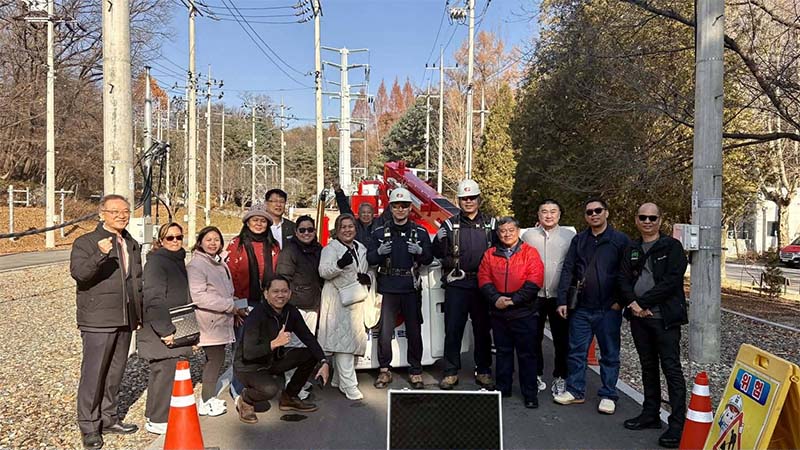
The delegation, led by Primelectric President and Chief Executive Officer Roel Castro, visited the Transmission and Distribution Headquarters of the Korean Electric Power Corporation (KEPCO) in Seoul. KEPCO is internationally recognized for its highly efficient power system, consistently cited as a global leader in transmission and distribution performance.
Learning from a Global Benchmark
During the visit, KEPCO officials presented key performance indicators that set the utility apart from many counterparts worldwide. Among these were its system loss rate of only 3.53 percent and a system average interruption frequency index of 0.6 percent annually — figures that reflect minimal unscheduled power outages across its network.
These results, according to KEPCO, are largely driven by long-term investments in modern infrastructure and advanced technologies. Primelectric officials were shown how South Korea’s distribution system combines automation, digitalization, and preventive maintenance to achieve high levels of efficiency and reliability.
Advanced Infrastructure and Automation
KEPCO demonstrated several technical features that support its strong performance. About 12.3 percent of its distribution lines are already placed underground, particularly in major commercial districts. All distribution lines are fully insulated, reducing the risk of faults caused by weather and external interference.
The utility has also deployed thousands of automatic circuit reclosers capable of restoring power within one second after a fault. In addition, Primelectric representatives observed unmanned substations and remotely operated control systems, including switches and reclosers, most of which are fully digitalized and monitored in real time.
Another key area highlighted was KEPCO’s capability to conduct live line maintenance, allowing repairs and upgrades to be carried out without interrupting electricity supply to consumers.
Emphasis on Safety and Workforce Protection
Beyond technology, Primelectric officials noted KEPCO’s strict adherence to safety standards. The Korean utility showcased specialized protective equipment and clearly defined protocols designed to safeguard linemen and technical personnel during operations, particularly during high-risk maintenance activities.
This focus on safety was cited as an essential component of maintaining system reliability while protecting the workforce.
Implications for Philippine Utilities
According to Castro, the insights gained from the benchmarking mission will help guide Primelectric’s long-term strategy, particularly for its operating units MORE Power in Iloilo, Negros Power, and Bohol Light. He noted that the visit highlighted not only advanced systems, but also a culture that prioritizes efficiency, reliability, and safety.
Primelectric plans to gradually apply the lessons learned, including sending engineers to the KEPCO Academy for further training on modern equipment and system management. The company aims to introduce these practices in phases, aligned with local conditions and regulatory requirements.
Moving Toward Global Standards
As Primelectric continues to expand and modernize its operations, the South Korea visit underscores its intention to benchmark against established international leaders. By adopting proven technologies and operational approaches, the company seeks to steadily elevate the standard of power distribution in the Philippines.
The benchmarking mission marks a significant step in Primelectric’s efforts to build more resilient, efficient, and consumer-focused electricity networks—bringing local utilities closer to world-class performance levels over time.